Thursday, September 19, 2013

Angry Black Man

What the problem IS? “Much is required from those to whom much is given, for their responsibility is greater (Luke 12:48).”

By Eric Stradford and Stephanie A. Walker Stradford

clip_image002

AMWS, September 19, 2013, Washington, DC -- An angry black man at The White House this week is reportedly a figment of someone else’s imagination. A vocal minority within an elected majority has called on the President of the United States to value the angry black man as a threat to America’s economic security.

This week, President Barack Obama identified “a faction” that views compromise as a dirty word. “Anything that is even remotely associated with me, they feel obliged to oppose,” he said.

The President’s decision to keynote the Phoenix Awards Dinner at The Congressional Black Caucus Foundation’s (CBCF) Annual Legislative Conference (ALC2013) underscores a minority agenda to expand opportunities in health, education, and economic recovery. Ironically, the majority of Obama’s audience at the conference is a minority group of Americans historically categorized by the color of their skin.

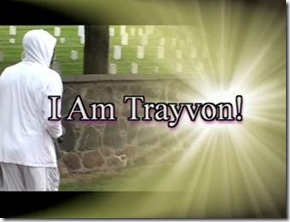
National Security is among the historically excluded topics from the black caucus agenda. But rumors of an angry black man, perhaps heightened by a mass shooting at The Washington Navy Yard, a police shooting of a black man in Charlotte, NC, and a sighting of Trayvon Martin’s parents in D.C., has added cause to perceive the increased presence as a credible threat.

Up to now, the content of character for America’s legendary Stolen People has been to expect more from One Nation Under God. A half century after the historic 1963 March On Washington, remnant survivors have renewed the challenge for Washington to choose—“Chaos or Community?” CBC leaders are calling on fellow Americans to “be and to lead the positive change needed in public policy,” said A. Shuanise Washington, president and chief executive officer of CBCF.

Some congressional leaders and their constituents fear that Black America’s longstanding battle cry, “we shall overcome” might be an emerging reality for America’s future. They seem driven, perhaps by fear, to block Obama and a minority base of constituents from achieving anything but <= to the status quo. The knee jerk reaction to rumors of a black man in The White House has been STAND YOUR GROUND! Some have gone as far to threaten a shutdown of the federal government “on principal.”

As a counter measure, CBCF has tapped Congressman Andre Carson (D-IN) for HIP HOP POLITICS, OUR GENERATION'S MARCH TOWARD AMERICA'S FUTURE. The discussion centers on how the hip hop generation can drive political activism. Ongoing discussion addresses barriers perceived by hip hopers in moving their agenda to the next level.

Earlier this week, The Congressional Black Caucus Foundation, Inc. (CBCF) announced plans for a $5 million investment in African-American banking institutions. The investment is said to be “part of a broader effort” to increase the availability of loans for businesses and individuals in African-American communities. CBCF is targeting banks in four regions of the country-the North, South, East and Midwest in an attempt to achieve “geographic balance” in an initiative that could prove crucial in lifting the economic fortunes of black communities. In all, five banks are to receive $1 million each.

The threat feared by a diminishing majority in Congress is now out front. And you guessed it! It’s all about the money. The intentional, pro-social approach, measured by a mere $5 million community reinvestment represents a pinchin’ from a trillion dollar Troubled Asset Relief Program. The $5 million investment by CBCF reflects a change in attitudes and actions about equity for historically disadvantaged Americans. One might recall TARP as the congressionally approved government purchase of assets and equity from financial institutions to strengthen its financial sector. President George W. Bush signed TARP into law October 3, 2008 and bounced a check to purchase or insure up to $700 billion of "troubled assets."

Citigroup, Bank of America, J P Morgan Chase, Wells Fargo, GMAC Financial Services (Ally), General Motors, Goldman Sachs, Morgan Stanley, PNC Financial Services Group, U.S. Bancorp, Chrysler, Capital One Financial, Regions Financial Corporation, American Express, Bank of New York Mellon Corp, State Street Corporation, and Discover Financial all participated in a “shell game” to shift the full faith and credit of the American people toward an emerging new minority.

To date, some in the financial industry have been doing the bait and switch – diverting the loaned dollars from the intended reason. Others further abused investors after the TARP legislation was passed by telling investors their money was invested in the federal TARP financial bailout program and other securities that did not exist.

In an October 2011 quarterly report to Congress, The Special Inspector General for the Troubled Asset Relief Program (SIGTARP) reported "more than 150 ongoing criminal and civil investigations." SIGTARP had already achieved criminal convictions of 28 defendants (19 had already been sentenced to prison), and civil cases naming 37 individuals and 18 corporate and or legal entities as defendants. It had recovered $151 million, and prevented $553 million from going to Colonial Bank, which failed.

The $5 million community reinvestment by CBCF is being praised by some as a demonstration of accountability to the beloved community. “Much is required from those to whom much is given, for their responsibility is greater (Luke 12:48).” Others fear any reinvestment in certain people might be construed as reparation for slavery--replacing that hand out of past politics with a hand up to the future.

Saturday, September 14, 2013

BIG Financial Mistakes: Part 1

By Stephanie A. Walker Stradford and Eric Stradford

September 13, 2013 – AMWS - Since 2009, we have been on a quest to improve our finances and empower others to do the same. Most of us come from hard working parents or grandparents who lived from paycheck to paycheck.

Most of us desire the American Dream (or at least what it used to be) for ourselves, our children and grandchildren. But, too many of us are set in our ways and refuse to CHANGE our habits to make a difference in our life and, therefore, those we love. Get real! If you keep doing the same thing over and over, you will continue to get the same results.
Regardless of your circumstances, here are a few tips that will change your future. Just try it for one year. If it doesn’t improve your life, stop.

ADDICTIONS – If you have a negative habit which has turned into an addiction, whether it is abuse, bullying, smoking, alcohol, drugs, pornography, prostitution, or worse, GET HELP TODAY! It has cost you too much and your family has paid an enormous price. Don’t wait. Addictions are Big Financial Mistakes. Yes…it will be hard. No…it is not impossible. It is never too late for you to become a productive human being and use your story to make a positive difference in the lives of others.

SAVINGS – Pay yourself! Every time you get paid and every financial gift for your birthday or a holiday set aside a portion for your personal savings account. When you go to the store and have pocket change, set it aside in jar or vase for your savings. When you get rebate checks, save them! If you have money left over at the end of the month after paying your bills, move it to your savings account. You will not regret this action of fiscal responsibility and it will add up quickly.

CAR LOANS - A decade ago, the average term for a new car loan was 53 months. Now, according to Federal Reserve data, the average term is ten months longer which means more interest paid by the consumer. The longer the term, the more money you are wasting because a car is a depreciating asset. In just one year after your purchase, the value will usually be 30 to 50 percent lower, depending on the make, model and year.

Recommendation: Do not pay interest on a car for any longer than you must pay, depending on your down payment and income. And never, if possible, agree to a car loan for longer than 60 months. You are paying more and getting less for your money. If you cannot afford the payment under 60 months, you need to shop for a cheaper car.

Conversely, do not pay cash for the car unless it is a used small ticket item. Why? You can help your credit score by paying a short term auto loan on time. Select 36 months or less and pay ahead of the due date. If you have the funds to pay the car in full, put it in an interest bearing account so that you have the payment when due, and you are making money on your money. After one or two years, pay it off in full.

CREDIT CARDS – Don’t buy sales items on credit, unless you are going to pay the bill in full within 30 days or with no interest. According to Suze Orman, if you purchase $350 worth of merchandise at a 15 percent discount, your bill will be $298. But if the $298 goes onto your credit card at 20 percent interest and you pay only the minimum due each month (usually about 3 percent), it will take you two years and $67 in interest to pay it off.

CASH OR DEBIT – Pay cash or debit for most purchases, unless there is a benefit using credit (such as points for gas or travel). When you use credit, pay in full when the bill arrives. If you cannot afford to pay in full, you should decide in advance if the item is essential. If it is not essential, wait and save for it but do not make the purchase on credit. For instance, if you NEED new tires for the car, cannot pay cash or debit and must put it on credit, make the purchase and pay it off as soon as possible.

AUTO AND HOME INSURANCE - Do not select a low deductible on your auto or home insurance policy. Although it seems that you are limiting your immediate expenses with a low deductible, you should not report small claims which may increase your policy or cause your agent to drop you. When possible, meaning you have more than $1,000 in savings, elect for a $1,000 deductible and you may reduce your premium by 10 percent.

EDUCATION SAVINGS – If you have just had a baby, your child is in elementary school or not yet ready to graduate from high school, begin to set aside funds in a 529 plan or other savings account for higher education. Did you know that fewer than 40 percent of students graduate in four years? A fifth year can add 25 percent to the cost of higher education. So, you have a responsibility to encourage your child to become an academic achiever and score well on Advanced Placement tests. This action can reduce the required coursework in college, which reduces your costs.

The range of tuition is vast. However, a good estimate is between $10,000 and $60,000 per year. This is tuition and does not include books, a computer, furnishing the room, transportation costs, trips home for holidays and pocket money. If your child’s career requires a graduate degree or a doctorate, that bottom line drastically increases. Starting to save at birth or at a young age becomes critical as the costs for education increases. And, don’t dismiss FAFSA forms for financial aid, federal loans, and scholarships. Every penny counts!

COLLEGE – Your child or grandchild may want to go to a fantastic private college. However, did they work and save for their education? It is also possible that you did not create an education fund and private school is outside your price range. Also, take into consideration that every child does not have to go to a four-year college. There are good technical schools and community colleges, depending on the career choice. A college education can be valuable, but it makes absolutely no sense to accrue extensive debt in today’s economy. Your child may have a great degree, unable to find a job and must come back home to live in your basement! Suze Orman says, “I can't stress this enough: Do not deplete your retirement fund or mortgage your home to pay for college. That money needs to keep working for your future.”

Summary: We hope that these tips improve your life as much as it has ours. Please look for Part 2 of this series. Remember, faith is the substance of things hoped for, the evidence of things not seen. If you start today to improve your life and believe that ALL things are possible, within a few months, and certainly a year, you will see the evidence of your hard work and perseverance. Be blessed!

Research provided by Suze Orman


Monday, August 26, 2013

Needs of The One

“At times the needs of the one outweigh the needs of the millions, and in time the vision of the one, can move millions to the miracle.” -- Unknown

By Stephanie and Eric Stradford

clip_image002

As millions participated in a virtual March On Washington, Economist Yvonne R. Griswold, a national director for Youth Achievers USA Institute and fellow Youth Achiever John H. Bonds III, regional manager for Global Cleaning Services, LLC, engaged a Whole Village in Cobb County, GA to endow One Community Asset, The Joi Butler Fellowship of YouthUSA. Photo by Crystal Smith


AMWS, August 26, 2013, Atlanta – In the national demonstration for human rights, participants are most likely pressed toward the movement. The media mindset of the past has been to microwave the message for quick and easy consumption, mass marketing Cliffnote summaries to the millions and the millions who might follow them.

But for the 50th Anniversary of the March On Washington, a message is getting through despite some bad habits of the past. Veteran leaders like Dr. C.T. Vivian and The Honorable John Lewis are tapping into endless possibilities for framing collective action by committing themselves to a common vision for America’s Future.

The Reverend Dr. Bernice A. King, Chief Executive Officer for The King Center offered some tangible guidance for moving the movement. In 1963, millions walked away with a common and sustainable reference to the March On Washington. Almost everybody looks back to part of a speech they remember as “I Have A Dream.”

In looking ahead, Bernice A. King is building on a message behind the media blitz of mass movement. The youngest daughter of Martin Luther and Coretta Scott King has taken on the task of servant leadership for the remnant watershed factions of the historic American Civil Rights Movement. Her needs, perhaps inspired by the greatest quote from the 1963 #MarchOnWashington, are today among the most important reasons for the masses to march. “I have a dream that my four little children will one day live in a nation where they will not be judged by the color of their skin, but by the content of their character,” said The Reverend Dr. Martin Luther King, Jr.

As the youngest of three surviving offspring, her message has been simple, elegant and compelling. But, like her father and her mother before her, the message is still being met with unjustifiable resistance. The media can share blame with the masses because her message to herself has been simply, “BE A KING.” The difference made by half a century of growing up as children of the Civil Rights Movement is that everybody needs to be your daddy and your momma.

clip_image004
Her simple, humble request is for WE THE PEOPLE to follow some marching orders. Buy and read the book, Where Do We Go from Here: Chaos or Community? by Martin Luther King, Jr.  The 50th Anniversary of the March on Washington holds specifically inspiring significance for B. A. KING. Today, the masses must embrace the humility in the messenger’s enduring message.

Bernice Albertine King (born March 28, 1963) is today an American Baptist minister. She is the second daughter and youngest child of civil rights leaders Dr. Martin Luther King, Jr. and Coretta Scott King. Her older siblings are Martin Luther King III, Dexter Scott King, and the late Yolanda Denise King. Bernice was only five years old when her father died and is the only King child to have become a minister.

Her daddy, Martin Luther King, Jr. (January 15, 1929 – April 4, 1968) was, to most of us, an American clergyman, activist, and leader in the African-American Civil Rights Movement. He is best known for his role in the advancement of civil rights using nonviolent civil disobedience. King has become a national icon in the history of American progressivism.

A Baptist minister, King became a civil rights activist early in his career. He led the 1955 Montgomery Bus Boycott and helped found the Southern Christian Leadership Conference (SCLC) in 1957, serving as its first president. With the SCLC, King led an unsuccessful struggle against segregation in Albany, Georgia, in 1962, and organized nonviolent protests in Birmingham, Alabama, that attracted national attention following television news coverage of the brutal police response. King also helped to organize the 1963 March on Washington, where he delivered his "I Have a Dream" speech.

There, he established his reputation as one of the greatest orators in American history. He also established his reputation as a radical, and became an object of the Federal Bureau of Investigation's COINTELPRO for the rest of his life. FBI agents investigated him for possible communist ties and reported on them to government officials.

On October 14, 1964, King received the Nobel Peace Prize for combating racial inequality through nonviolence. In 1965, he and the SCLC helped to organize the Selma to Montgomery marches and the following year, he took the movement north to Chicago. In the final years of his life, King expanded his focus to include poverty and the Vietnam War, alienating many of his liberal allies with a 1967 speech titled "Beyond Vietnam".

King was planning a national occupation of Washington, D.C., called the Poor People's Campaign. King was assassinated on April 4, 1968, in Memphis, Tennessee. His death was followed by riots in many U.S. cities. Allegations that James Earl Ray, the man convicted of killing King, had been framed or acted in concert with government agents persisted for decades after the shooting, and the jury of a 1999 civil trial found Loyd Jowers to be complicit in a conspiracy against King.

King was awarded the Presidential Medal of Freedom and the Congressional Gold Medal posthumously. Martin Luther King, Jr. Day was established as a U.S. federal holiday in 1986. Hundreds of streets in the U.S. have been renamed in his honor. A memorial statue on the National Mall was opened to the public in 2011.

Where do we go from here: Chaos or Community?   READ THE BOOK!


Wednesday, August 21, 2013

March On Washington

A virtual movement from information to operation

clip_image002

AMWS, August 22, 2013, Washington, DC -- Fifty years ago, civil rights activists from across the United States gathered here for one of the most momentous events of the 20th century. They marched and rallied around a shared message of civil liberty, civil rights, and economic opportunity for all.

It would be a good thing to say that we have made progress. It would be great if the measured steps of a few produced great strides in America’s fight for equality. But the truth is people are unemployed, underemployed, and scared to death about their children’s future. For too many in our families, the glass is not even half full.

We are all reminded of times where the needs of the many outweigh the needs of the few.  But, when the threat comes to your door, there is no doubt that your national security is priority one in your American dream.

The basic right to vote is in danger. It seems everyday another child dies from some form of violence. Our criminal justice system is anything but "just for all." Children are being left alone more as parents take on jobs that barely pays the bills. Too many people in too many communities struggle to find jobs and provide for their families. Too many dreams remain unfulfilled.

So, as neighbors from across America prepare to #MarchOnWashington, we invite you to join a virtual economic movement. SAVE a little money by connecting from home. Then SAVE a little more money by sharing the ride to church with friends and family members. Finally, you can SAVE by learning more about your finances. Take a free online FDIC MoneySmart Financial Literacy course today and upload your certificates of completion.

FOLLOW US ON TWITTER @YouthUSA drafted some tweets to help get you to the virtual  #MarchOnWashington

Join us for a virtual #MarchOnWashington www.facebook.com/YouthAchieversUSA

What will it take to prevent gun violence? One Nation Under God! We #MarchOnWashington for #EconomicSecurity. http://youtu.be/HMkWhOR4qzA

Divisive politics of the past have no future. We #MarchOnWashington for #EconomicSecurity on Our Streets, USA. http://youtu.be/N7uWSpqpVIM

Our children r more valuable than stuff dividing us. We #MarchOnWashington for #EconomicSecurity on Our Streets, USA. http://youtu.be/hSg6JlBsYBE

Let the children come to me. God’s kingdom belongs to them. We #MarchOnWashington for #EconomicSecurity. http://youtu.be/5751pNO9kDA

Message to Congress. Get along! We #MarchOnWashington for #EconomicSecurity on Our Streets, USA. http://youtu.be/pTarSW2XN94

image

#MarchOnWashington begins 8:00 am Saturday August 24, 2013 at the Lincoln Memorial. marching to the King Memorial and ending at the Washington Monument.

Wednesday, July 31, 2013

Martin to Mayo to Martin

By Eric Stradford and Stephanie Walker Stradford

clip_image002
AMWS, July 29, 2013, Marietta, GA – An unyielding trust in God is one American value inherited from the Southern Christian Leadership Conference. Another might be an enduring hope that trouble won’t last always. The historic civil rights organization founded by Reverend Dr. Martin Luther King Jr. is still standing, back to back, and shoulder to shoulder, to meet civil rights challenges now and into the future.


In Cobb County, Georgia, ground zero for civil rights challenges, The Reverend Dr. Sheryl Graves, Dr. H. Benjamin Williams, Attorney Carletta Sims and others have been reviewing practices of the past and charting a course toward an inclusive future. Dr. Graves continues the work she and her late husband Rev. Dwight Graves considered their life’s mission as foot soldiers in the movement. Slow-walking civil rights problems in the schoolhouse, the courthouse, the workplace and the unemployment line serve citizens described as Martin Luther King, Jr’s “beloved community.”

According to local SCLC President, H. Benjamin “Doc Ben” Williams, it’s a job that doesn’t pay. How can that be? The job of keeping the dream of Martin Luther King Jr. alive does not earn a decent wage for the foot soldiers in the movement? Clearly, someone needs to go back and review the transcript of the now famous “I have a dream” speech.

Cobb County Chapter President Williams and Georgia State Chapter President Reverend Samuel Mosteller are calling on fellow foot soldiers, past and future investors, as well as beneficiaries of Dr. King’s investment to do just that. As local leaders prepare for SCLC’s 55th Annual Convention, and their return to Washington, DC for the 50th Anniversary of the March on Washington, local, state and national leaders are “Moving Together, Moving Forward for Jobs and Freedom.

The Reverend Mosteller engaged social media partners to address economic security concerns raised by Dr. King’s speech – concerns that still exist as “Unfinished Business.” Dr. Williams invited Youth Achievers USA Institute, a national 501c3 public charity to share an emerging vision for the movement from INFORMATION TO OPERATION.

The INFORMATION TO OPERATION initiative seeks community reinvestment from corporate beneficiaries of tax credits, federal grants and contracts. A Billion + Change is a national campaign to mobilize $1 billion of pro bono and skills-based service by 2013 to address core issues our communities face.

The federal initiative seeks to transform how businesses leverage their employees to make a lasting impact on society by engaging, inspiring, and mobilizing professional talent to build the capacity of non-profit organizations to better meet community needs. The grassroots initiative engages local youth with leadership opportunities where they live, learn, work and worship. Caring adults to include retirees, unemployed and underemployed neighbors support capacity building needs. The federal initiative “strategically aligns philanthropy and business goals, and provides a platform for enhanced collaboration, leadership development, and community visibility for the company and its employees.” The replicable capital campaign developed for local communities directs investments to local needs.

In theory, results are measured by the impact of collective, corporate or national efforts in meeting the needs of the individual citizen. If all news and politics were local, the killing of Trayvon Martin and the not guilty verdict awarded to his killer, George Zimmerman might have died in Sanford, Florida.

In reality, color-blind prosecutors perhaps did the best they could with the evidence available to them. A color-blind judge instructed a color-blind jury to consider a law legislated through a color-blind political system. If anyone ever questioned the reality of “blind justice,” the trial of George Zimmerman proved it beyond a shadow of a doubt.

For SCLC leaders, the inclusive economy hoped for, emerged as a “dream deferred” within a “color-blind” vision of America’s future. Before Zimmerman gave chase, detained, tried and executed Trayvon Martin, legal precedence for racial profiling had long been established within a majority-minority, color-blind society.

In Cobb County, a genuine desire to heal America remains clouded by misperception that equal rights and equal opportunity is here for all. A quest for answers bringing Youth Achievers USA Institute organizers to the region follows a seemingly endless trail of tears.

Our move to Georgia in 2005 followed a series of evolving stories concerning America’s future. We had completed projects that culminated in a Million Youth Movement, homegoing celebrations for Arthur Fletcher, Rosa Parks and C. Delores Tucker. The Reverend Dr. Diane Johnson, one of Stephanie’s choir buddies from Ebenezer AME Ft. Washington blessed us with and opportunity to engage in “blackonomics.” Neither we nor Dr. Johnson referred to it as that, but it seemed to be a good description for the modern day Civil Rights movement.

The 10th Community Economic Empowerment Conference, held by what was then known as the Collective Banking Group, connected people of faith, business and banking to address unmet needs in their communities. Among the clinicians were newly elected Bishop E. Earl McCloud, who at the time oversaw economic initiatives of the AME Church through the Office of Ecumenical and Urban Affairs and our friend Jim Klingman, an author from Cincinnati who headed the African American Chamber of Commerce. It was not the first such event for Stephanie A. Walker Stradford.

Formerly known in DC Circles as Stephanie Colbert, the veteran communications strategist orchestrated well known conferences to include the Rosa Parks Tribute at the Kennedy Center, the Greater Washington Business Center, National Minority Supplier Development Council, the Urban Bankers Summit 2000, Bethune DuBois events, National Black Caucus of State Legislators Conferences, and the list goes on.

Needless to say when Jim Klingman told Stephanie about William Mayo, she was ready to book a midnight train to Georgia to see firsthand how American children were being undervalued. Mayo had been arrested in Cobb County, tried in a color-blind court, and sentenced to two life sentences plus 40 years for a robbery he did not commit. Even his co-defendants say he is innocent. Mayo appeared via satellite in 2002 on the John Walsh show, When False Accusations Put You Behind Bars.

Today, Klingman posts at blackonomics.com, his expert observations on present day injustices. “What has become our mantra in this post-George Zimmerman era are U.S. Attorney General, Eric Holder’s words to the NAACP last week; “We must stand our ground” against injustice. Holder drew cheers, “Amen’s,” and a standing ovation when he spoke those words.

The next day, however, Martin Luther King III spoke to the NAACP, and while he did suggest we stand our ground, he went a bit further and reminded Klingman of his father’s speech in Memphis the night before he was killed. King III, after reflecting on our trillion dollar “spending power,” slipped in a little suggestion that maybe we should no longer buy Florida Orange Juice. Hmmm.

Whether we’re thinking about Trayvon Martin, William Mayo, or too many other victims of color-blind dreaming like Marissa Alexander, the legacy of Martin Luther King, Jr. needs to be revalued for reinvestment in America’s future. Marissa Alexander, the 31-year-old Florida woman who fired a warning shot at her abusive husband, was sentenced in 2012 to 20 years in prison.

Alexander was convicted of three counts of aggravated assault with a deadly weapon for firing into a wall near her husband and his two young children at their Jacksonville home in 2010. Alexander has maintained that she wasn't trying to hurt anyone and that she was “standing her ground” against a man who had over the course of nearly a year punched and choked her on several different occasions. Alexander says that she believed she was protected that day under the state's Stand Your Ground Law, which gives people wide discretion in using deadly force to defend themselves. A judge, a jury, and state attorney Angela Corey, disagreed. It took the jury 12 minutes to find her guilty.

The Montgomery Bus Boycott began on December 5, 1955 after Rosa Parks was arrested for refusing to give up her seat to a white man on the bus. The boycott lasted for 381 days and ended on December 21, 1956, with the desegregation of the Montgomery bus system.
The boycott was carried out by the newly established Montgomery Improvement Association (MIA). Martin Luther King, Jr. served as President and Ralph David Abernathy served as Program Director. It was one of history’s most dramatic and massive nonviolent protests, stunning the nation and the world. The boycott was also a signal to Black America to begin a new phase of the long struggle, a phase that came to be known as the modern civil rights movement.

As bus boycotts spread across the South, leaders of the MIA and other protest groups met in Atlanta on January 10 – 11, 1957, to form a regional organization and coordinate protest activities across the South. Despite a bombing of the home and church of Ralph David Abernathy during the Atlanta meeting, 60 persons from 10 states assembled and announced the founding of the Southern Leadership Conference on Transportation and Nonviolent Integration. They issued a document declaring that civil rights are essential to democracy, that segregation must end, and that all Black people should reject segregation absolutely and nonviolently.

Further organizing was done at a meeting in New Orleans, Louisiana on February 14, 1957. The organization shortened its name to Southern Leadership Conference, established an Executive Board of Directors, and elected officers, including Dr. Martin Luther King, Jr. as President; Dr. Ralph David Abernathy as Financial Secretary-Treasurer; Rev. C. K. Steele of Tallahassee, Florida as Vice President; Rev. T. J. Jemison of Baton Rouge, Louisiana as Secretary; and, Attorney I. M. Augustine of New Orleans, Louisiana as General Counsel.


Thursday, June 13, 2013

Too Big To Fail or Too Risky to Exist?

How America Values Cradle To Prison Pipeline
 
clip_image002
By Stephanie and Eric Stradford

AMWS June 13, 2013, Atlanta -- Five years after America’s most recent financial crisis peaked, Washington is getting around to studying some lingering effects. What happens when historic social problems are repeatedly swept under the rug? What have we learned from 19th, 20th and 21st Century financial disasters?

Where are we now? Did the bloody Civil War to preserve a slave system that sustained America’s financial industries (human trafficking, farming, construction, railroads, hospitality, and much more) bring about “justice for all?”  As the nation seeks wisdom of the courts on voting rights and affirmative action, too many have yet to recover from historically unlawful and or unethical practices that continue to threaten American lives.

What are the prospects for meaningful reform of the American Values system? Will our $16 trillion debt crush us? Should we let it? Is it legitimate? What comes next? Questions posed by the American Scholar and others point to a broken system that has been economically measured, “Too Big to Fail and Too Risky to Exist.”

Some of the same bad habits feeding Wall Street’s 2008 meltdown seem to have been evident in the behavioral economics of 1929. In both failures, we might have at least learned to PAY ATTENTION. But since we didn’t increase our own interest in America’s money in the bank, we lost value in our obligations to community reinvestment.

By now, most of us know about the “Cradle to Prison Pipeline.” The Children’s Defense Fund, founded by Marian Wright Edelman, describes this particular problem as a threat to America’s national security. However, public policy professionals continue to package the problem in social terms. In any case, the U.S. Senate offers a 2 hour 22 minute and 48 second discussion to help you get your head around it.

We are told that The Federal Reserve Bank dug up $9 trillion to make short term loans through some 21,000 transactions. The Fed’s action in September 2008 followed the implosion of investment bank Lehman Brothers. Not one of the 21,000 transactions can be traced to the long term effects of investing too much in America’s prisons and too little in American children.

The question “How long?” festers in the wounded spirit of the nation’s have-nots and can add value to America’s vision of its own future. In almost every situation where “We The People” as “One Nation Under God” applied “ICAN,” we did.

The Wall Street Crash of 1929, known as Black Tuesday, and the Stock Market Crash of 1929 is arguably the most devastating stock market crash in the history of the United States. The crash signaled the beginning of the 10-year Great Depression that affected all Western industrialized countries and did not end in the United States until the onset of American mobilization for World War II. That historic event followed a credible threat to America’s national security at the end of 1941.

In 1989, the CEOs of our seven largest banks earned an average of $2.6 million. In 2007, the average CEO income had risen to $26 million. The ordinary citizen might believe that this is grotesque overcompensation, but the financial sector found the pay perfectly reasonable. This credible threat to economic security is known as a “golden parachute,” an employment contract or agreement guaranteeing a key executive substantial financial benefits in the event of job loss caused by the company's being sold or merged.

The late Arthur A. Fletcher, an assistant U.S. Labor Secretary in the Nixon administration, and Father of the Affirmative Action Enforcement Movement, alerted advocates to ways and means for holding banks, treasury and labor officials accountable to the 1977 Community Reinvestment Act.  Fletcher introduced some “Friends of America’s Future” to the Community Development Financial Institutions Fund. His economic ministry provided technical assistance to historically disadvantaged students, small businesses, and even some community bank executives he characterized as “the spook by the door.”

Fletcher and others saw the crisis as a cultural failure combined with a political collapse. Behavior by bank executives that once was discouraged by a lifted eyebrow created complex structures abetted by an aggressive reading of the statutes—anything not explicitly prohibited was considered permissible. So, theoretically, any plan for community reinvestment within the law, is a plan worth taking to the bank.

Not necessarily so, too many displaced bank executives consider their past failures as a plus on their resumes. Too many bank personnel are uninformed or disinterested about what they can do to engage Americans in community reinvestment. In the words of former First Lady Nancy Reagan, they just say no. The institution formerly known as Wachovia Bank found it all too easy to say no. Its own history, habits and toxic assets lead to its 21st Century demise.

On its way out, Wachovia responded to allegations of bad banking with a report on 19 financial institutions and money banked by slave owners. Some of the institutions, researched by The History Factory, likely profited from slavery through their many investments in banks based in slave states. Two of the three founders of the Bank of North America, Robert Morris (the bank’s first president) and Thomas Willing, amassed at least part of their personal fortunes from the slave trade. In 1781, they formed Willing & Morris, a Philadelphia-based merchant business that dealt significantly in slave shipments and trading. Both Willing and Morris used their profits from the slave trade to fund the establishment of the Bank of North America.

In 2000, Congress started to address economic fallout such as redlining, predatory lending and non-compliance with the 1977 Community Reinvestment Act. The New Markets Tax Credit Program (NMTC Program) was established to spur new or increased investments into operating businesses and real estate projects located in low-income communities.

Since the NMTC Program's inception, the CDFI Fund has made 749 awards allocating a total of $36.5 billion in tax credit authority through a competitive application process. This $36.5 billion includes $3 billion in Recovery Act Awards and $1 billion of special allocation authority to be used for the recovery and redevelopment of the Gulf Opportunity Zone.

Current First Lady Michelle Obama has been out front in the transformation of an economic security issue that used to be a social concern. In 2011, Treasury invested $25 million in grants for The Healthy Food Financing Initiative (HFFI). Through a range of programs at the U.S. Departments of Agriculture (USDA), Treasury, and Health and Human Services (HHS), HFFI expands the availability of nutritious food, including developing and equipping grocery stores, small retailers, corner stores, and farmers markets selling healthy food.

The latest chance to win a chance to win with grassroots community reinvestment identifies PNC Bank as the applicant for a Bank Enterprise Award. The U.S. Treasury program identifies public funds to encourage investments in non-real estate businesses for working capital and equipment. The Internal Revenue Service (IRS) issued final regulations (Treasury Decision 9600) modifying reinvestment requirements under the New Markets Tax Credit (NMTC) Program.

One community bank executive perhaps did not get the corporate memo about what to do when America’s Future calls. “Thanks, I got your information and when you all have a specific project with ALL of the supporting information that we can evaluate and make a decision, I will get back to you with our response.” The bank executive’s 10 minute tongue lashing followed up on a two hour briefing with his associate. The associate leisurely took two weeks to “get my head around the idea.”

Phil Angelides, chairman of the U.S. Financial Crisis Inquiry Commission, summarized the problem: “These banks are too big to fail. They’re too big to manage. They’re too big to regulate. They’re too complex to understand and they’re too risky to exist. And the bottom line is they offer very little benefit.”

Discussion of a full proposal that funds counter terror operations responding to Cradle To Prison Pipeline calls for vision such as that communicated by James E. Rohr, Executive Chairman, The PNC Financial Services Group. “A business cannot succeed if its communities are not well positioned for future growth and success. That is why at our bank we devote resources and human capital to seed ideas, foster development initiatives and support nonprofit organizations.” To date, neither bank employee has added value to the stated corporate vision.

Rarely is there a frank discussion of the legitimacy of the debt. It seems that debt, prefaced by, “In the interest of national security,” is necessary debt. As Mervyn King, governor of the Bank of England, put it, “There was a cultural tendency to be always on one side and always to be pushing the limits.” The crisis almost immediately destroyed the rule of law.

Secretary of the Treasury Henry Paulson told The Washington Post in November 2008: “Even if you don’t have the authorities—and frankly I didn’t have the authorities for anything—if you take charge, people will follow. Someone has to pull it all together.”


Friday, May 24, 2013

National Security Policy for Children’s Defense

By Eric Stradford

clip_image002[7]

AMWS, May 23, 2013, Atlanta -- As a seminarian, Ambassador Andrew Young studied the teachings of Mohandas Gandhi. He became certain it was possible to change society without violence. He also grew convinced that civil rights could best be achieved through politics. No investor in Young’s positive youth development envisioned him as a liability in a minus $16 trillion national economy. “The transfer of wealth and values is through the family,” said Young. “If you do not understand capital and capitalism, you are a slave.”

The 80 year old statesman for global human rights shared some personal insights on America’s children with practitioners and policy analysts gathered for a Research to Practice Policy Forum. The New Orleans native and Howard University graduate admonished advocates to consider some proven practices in developing and funding innovative approaches to raising children. Program planners from Youth Achievers USA Institute met like minds from Children’s Defense Fund, Goodwill, faith-based ministries, social justice and institutions of higher education to address a credible threat against American lives.

A Call To Action, facilitated by the Administration for Children and Families in partnership with The Andrew Young School of Policy Studies, focused on the need to forge partnerships in support of family resilience. The policy shift from a social justice quagmire to an “intentional, pro-social approach for engaging American children in their own futures,” presents new opportunities for framing an inclusive national security mission.

“One of our greatest challenges is getting adults to work together for the benefit of our children,” said Michael Thurmond, interim Dekalb County, GA School Superintendent.

One mission concept is already formatted in a 2-hour mass media program and a 6-year old national campaign. The television program airs daily on HLN to raise awareness of issues affecting parenting in America. Anchor Kyra Phillips covers the nation's major news stories and explores more deeply how they relate to home, children and modern families.

The premise of the television program, “It takes a village to raise a child,” also identifies a community-based structure for sustainable, task-organized, homeland security operations. In a spirit of promoting win-win partnerships, Youth Achievers USA Institute adds to that premise, “It takes a whole village to raise a child.” A “Whole Village” is organized, equipped, and funded to meet the spiritual, physical, social, financial, educational, professional and recreational needs of an American child.

“No dream of a beloved community can endure the reality of a cradle to prison economy,” said Stephanie A. Walker Stradford, CEO, Youth Achievers USA Institute. “We cannot expect a profitable return on investment by investing negative value in negative behavior.” A partnership between HLN and Administration For Children and Families could add policy and practice to the promotion of “Raising America.” But the road from research and information sharing to policy and action will require a broader vision of inclusive economic security.

The Children’s Defense Fund, a non-profit child advocacy organization, has worked for 40 years to ensure a level playing field for all children. CDF champions policies and programs that lift children out of poverty; protect them from abuse and neglect; and ensure their access to health care, quality education and a moral and spiritual foundation.

According to CDF, 1 in 3 Black and 1 in 6 Latino boys born in 2001 are at risk of imprisonment during their lifetime. While boys are five times as likely to be incarcerated as girls, there are also a significant number of girls in the juvenile justice system. This rate of incarceration is endangering children at younger and younger ages.

This threat on American lives is known to advocates as America's pipeline to prison — a trajectory that leads to marginalized lives, imprisonment, and often premature death. Although the majority of fourth graders cannot read at grade level, states spend about three times as much money per prisoner as per public school pupil.

YouthUSA values each child as a “community asset” with 7-part vision of his or her own future. A free online application to THE ANNUAL YOUTH ACHIEVEMENT AWARDS invites any family, local church, sorority chapter, fraternity chapter, or community organization to join a national call to mobilize America from research to practice. There has never been a shortage of resources in “One Nation Under God,” just resourcefulness.

clip_image002

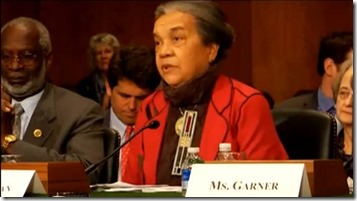
Click here to see Marian Wright Edelman’s 2010 testimony.  On November 18, 2010, CDF President Marian Wright Edelman testified before the U.S. Senate Subcommittee on Children and Families of the Committee on Health, Education, Labor and Pensions.


The hearing entitled, "The State of the American Child: Securing Our Children's Future", brought together a distinguished panel of witnesses to testify on the dire state of our children during these difficult economic times and how citizens and lawmakers must act now to secure our children's future and our nation's future. Others on the panel included, Helen Blank, Director of Leadership and Public Policy for the National Women's Law Center, Dr. Michael Casserly, Executive Director of the Council on Great City Schools, Peter Edelman , Professor of Law, Georgetown Law Center and Faculty Co-Director, Georgetown Center on Poverty, Inequality, and Public Policy, Jennifer Garner, Artist Ambassador, Save the Children and Dr. David Satcher, Director, The Satcher Health Leadership Institute and Center of Excellence on Health Disparities, Morehouse School of Medicine.