Wednesday, August 21, 2013

March On Washington

A virtual movement from information to operation

clip_image002

AMWS, August 22, 2013, Washington, DC -- Fifty years ago, civil rights activists from across the United States gathered here for one of the most momentous events of the 20th century. They marched and rallied around a shared message of civil liberty, civil rights, and economic opportunity for all.

It would be a good thing to say that we have made progress. It would be great if the measured steps of a few produced great strides in America’s fight for equality. But the truth is people are unemployed, underemployed, and scared to death about their children’s future. For too many in our families, the glass is not even half full.

We are all reminded of times where the needs of the many outweigh the needs of the few.  But, when the threat comes to your door, there is no doubt that your national security is priority one in your American dream.

The basic right to vote is in danger. It seems everyday another child dies from some form of violence. Our criminal justice system is anything but "just for all." Children are being left alone more as parents take on jobs that barely pays the bills. Too many people in too many communities struggle to find jobs and provide for their families. Too many dreams remain unfulfilled.

So, as neighbors from across America prepare to #MarchOnWashington, we invite you to join a virtual economic movement. SAVE a little money by connecting from home. Then SAVE a little more money by sharing the ride to church with friends and family members. Finally, you can SAVE by learning more about your finances. Take a free online FDIC MoneySmart Financial Literacy course today and upload your certificates of completion.

FOLLOW US ON TWITTER @YouthUSA drafted some tweets to help get you to the virtual  #MarchOnWashington

Join us for a virtual #MarchOnWashington www.facebook.com/YouthAchieversUSA

What will it take to prevent gun violence? One Nation Under God! We #MarchOnWashington for #EconomicSecurity. http://youtu.be/HMkWhOR4qzA

Divisive politics of the past have no future. We #MarchOnWashington for #EconomicSecurity on Our Streets, USA. http://youtu.be/N7uWSpqpVIM

Our children r more valuable than stuff dividing us. We #MarchOnWashington for #EconomicSecurity on Our Streets, USA. http://youtu.be/hSg6JlBsYBE

Let the children come to me. God’s kingdom belongs to them. We #MarchOnWashington for #EconomicSecurity. http://youtu.be/5751pNO9kDA

Message to Congress. Get along! We #MarchOnWashington for #EconomicSecurity on Our Streets, USA. http://youtu.be/pTarSW2XN94

image

#MarchOnWashington begins 8:00 am Saturday August 24, 2013 at the Lincoln Memorial. marching to the King Memorial and ending at the Washington Monument.

Wednesday, July 31, 2013

Martin to Mayo to Martin

By Eric Stradford and Stephanie Walker Stradford

clip_image002
AMWS, July 29, 2013, Marietta, GA – An unyielding trust in God is one American value inherited from the Southern Christian Leadership Conference. Another might be an enduring hope that trouble won’t last always. The historic civil rights organization founded by Reverend Dr. Martin Luther King Jr. is still standing, back to back, and shoulder to shoulder, to meet civil rights challenges now and into the future.


In Cobb County, Georgia, ground zero for civil rights challenges, The Reverend Dr. Sheryl Graves, Dr. H. Benjamin Williams, Attorney Carletta Sims and others have been reviewing practices of the past and charting a course toward an inclusive future. Dr. Graves continues the work she and her late husband Rev. Dwight Graves considered their life’s mission as foot soldiers in the movement. Slow-walking civil rights problems in the schoolhouse, the courthouse, the workplace and the unemployment line serve citizens described as Martin Luther King, Jr’s “beloved community.”

According to local SCLC President, H. Benjamin “Doc Ben” Williams, it’s a job that doesn’t pay. How can that be? The job of keeping the dream of Martin Luther King Jr. alive does not earn a decent wage for the foot soldiers in the movement? Clearly, someone needs to go back and review the transcript of the now famous “I have a dream” speech.

Cobb County Chapter President Williams and Georgia State Chapter President Reverend Samuel Mosteller are calling on fellow foot soldiers, past and future investors, as well as beneficiaries of Dr. King’s investment to do just that. As local leaders prepare for SCLC’s 55th Annual Convention, and their return to Washington, DC for the 50th Anniversary of the March on Washington, local, state and national leaders are “Moving Together, Moving Forward for Jobs and Freedom.

The Reverend Mosteller engaged social media partners to address economic security concerns raised by Dr. King’s speech – concerns that still exist as “Unfinished Business.” Dr. Williams invited Youth Achievers USA Institute, a national 501c3 public charity to share an emerging vision for the movement from INFORMATION TO OPERATION.

The INFORMATION TO OPERATION initiative seeks community reinvestment from corporate beneficiaries of tax credits, federal grants and contracts. A Billion + Change is a national campaign to mobilize $1 billion of pro bono and skills-based service by 2013 to address core issues our communities face.

The federal initiative seeks to transform how businesses leverage their employees to make a lasting impact on society by engaging, inspiring, and mobilizing professional talent to build the capacity of non-profit organizations to better meet community needs. The grassroots initiative engages local youth with leadership opportunities where they live, learn, work and worship. Caring adults to include retirees, unemployed and underemployed neighbors support capacity building needs. The federal initiative “strategically aligns philanthropy and business goals, and provides a platform for enhanced collaboration, leadership development, and community visibility for the company and its employees.” The replicable capital campaign developed for local communities directs investments to local needs.

In theory, results are measured by the impact of collective, corporate or national efforts in meeting the needs of the individual citizen. If all news and politics were local, the killing of Trayvon Martin and the not guilty verdict awarded to his killer, George Zimmerman might have died in Sanford, Florida.

In reality, color-blind prosecutors perhaps did the best they could with the evidence available to them. A color-blind judge instructed a color-blind jury to consider a law legislated through a color-blind political system. If anyone ever questioned the reality of “blind justice,” the trial of George Zimmerman proved it beyond a shadow of a doubt.

For SCLC leaders, the inclusive economy hoped for, emerged as a “dream deferred” within a “color-blind” vision of America’s future. Before Zimmerman gave chase, detained, tried and executed Trayvon Martin, legal precedence for racial profiling had long been established within a majority-minority, color-blind society.

In Cobb County, a genuine desire to heal America remains clouded by misperception that equal rights and equal opportunity is here for all. A quest for answers bringing Youth Achievers USA Institute organizers to the region follows a seemingly endless trail of tears.

Our move to Georgia in 2005 followed a series of evolving stories concerning America’s future. We had completed projects that culminated in a Million Youth Movement, homegoing celebrations for Arthur Fletcher, Rosa Parks and C. Delores Tucker. The Reverend Dr. Diane Johnson, one of Stephanie’s choir buddies from Ebenezer AME Ft. Washington blessed us with and opportunity to engage in “blackonomics.” Neither we nor Dr. Johnson referred to it as that, but it seemed to be a good description for the modern day Civil Rights movement.

The 10th Community Economic Empowerment Conference, held by what was then known as the Collective Banking Group, connected people of faith, business and banking to address unmet needs in their communities. Among the clinicians were newly elected Bishop E. Earl McCloud, who at the time oversaw economic initiatives of the AME Church through the Office of Ecumenical and Urban Affairs and our friend Jim Klingman, an author from Cincinnati who headed the African American Chamber of Commerce. It was not the first such event for Stephanie A. Walker Stradford.

Formerly known in DC Circles as Stephanie Colbert, the veteran communications strategist orchestrated well known conferences to include the Rosa Parks Tribute at the Kennedy Center, the Greater Washington Business Center, National Minority Supplier Development Council, the Urban Bankers Summit 2000, Bethune DuBois events, National Black Caucus of State Legislators Conferences, and the list goes on.

Needless to say when Jim Klingman told Stephanie about William Mayo, she was ready to book a midnight train to Georgia to see firsthand how American children were being undervalued. Mayo had been arrested in Cobb County, tried in a color-blind court, and sentenced to two life sentences plus 40 years for a robbery he did not commit. Even his co-defendants say he is innocent. Mayo appeared via satellite in 2002 on the John Walsh show, When False Accusations Put You Behind Bars.

Today, Klingman posts at blackonomics.com, his expert observations on present day injustices. “What has become our mantra in this post-George Zimmerman era are U.S. Attorney General, Eric Holder’s words to the NAACP last week; “We must stand our ground” against injustice. Holder drew cheers, “Amen’s,” and a standing ovation when he spoke those words.

The next day, however, Martin Luther King III spoke to the NAACP, and while he did suggest we stand our ground, he went a bit further and reminded Klingman of his father’s speech in Memphis the night before he was killed. King III, after reflecting on our trillion dollar “spending power,” slipped in a little suggestion that maybe we should no longer buy Florida Orange Juice. Hmmm.

Whether we’re thinking about Trayvon Martin, William Mayo, or too many other victims of color-blind dreaming like Marissa Alexander, the legacy of Martin Luther King, Jr. needs to be revalued for reinvestment in America’s future. Marissa Alexander, the 31-year-old Florida woman who fired a warning shot at her abusive husband, was sentenced in 2012 to 20 years in prison.

Alexander was convicted of three counts of aggravated assault with a deadly weapon for firing into a wall near her husband and his two young children at their Jacksonville home in 2010. Alexander has maintained that she wasn't trying to hurt anyone and that she was “standing her ground” against a man who had over the course of nearly a year punched and choked her on several different occasions. Alexander says that she believed she was protected that day under the state's Stand Your Ground Law, which gives people wide discretion in using deadly force to defend themselves. A judge, a jury, and state attorney Angela Corey, disagreed. It took the jury 12 minutes to find her guilty.

The Montgomery Bus Boycott began on December 5, 1955 after Rosa Parks was arrested for refusing to give up her seat to a white man on the bus. The boycott lasted for 381 days and ended on December 21, 1956, with the desegregation of the Montgomery bus system.
The boycott was carried out by the newly established Montgomery Improvement Association (MIA). Martin Luther King, Jr. served as President and Ralph David Abernathy served as Program Director. It was one of history’s most dramatic and massive nonviolent protests, stunning the nation and the world. The boycott was also a signal to Black America to begin a new phase of the long struggle, a phase that came to be known as the modern civil rights movement.

As bus boycotts spread across the South, leaders of the MIA and other protest groups met in Atlanta on January 10 – 11, 1957, to form a regional organization and coordinate protest activities across the South. Despite a bombing of the home and church of Ralph David Abernathy during the Atlanta meeting, 60 persons from 10 states assembled and announced the founding of the Southern Leadership Conference on Transportation and Nonviolent Integration. They issued a document declaring that civil rights are essential to democracy, that segregation must end, and that all Black people should reject segregation absolutely and nonviolently.

Further organizing was done at a meeting in New Orleans, Louisiana on February 14, 1957. The organization shortened its name to Southern Leadership Conference, established an Executive Board of Directors, and elected officers, including Dr. Martin Luther King, Jr. as President; Dr. Ralph David Abernathy as Financial Secretary-Treasurer; Rev. C. K. Steele of Tallahassee, Florida as Vice President; Rev. T. J. Jemison of Baton Rouge, Louisiana as Secretary; and, Attorney I. M. Augustine of New Orleans, Louisiana as General Counsel.





Thursday, June 13, 2013

Too Big To Fail or Too Risky to Exist?

How America Values Cradle To Prison Pipeline
 
clip_image002
By Stephanie and Eric Stradford

AMWS June 13, 2013, Atlanta -- Five years after America’s most recent financial crisis peaked, Washington is getting around to studying some lingering effects. What happens when historic social problems are repeatedly swept under the rug? What have we learned from 19th, 20th and 21st Century financial disasters?

Where are we now? Did the bloody Civil War to preserve a slave system that sustained America’s financial industries (human trafficking, farming, construction, railroads, hospitality, and much more) bring about “justice for all?”  As the nation seeks wisdom of the courts on voting rights and affirmative action, too many have yet to recover from historically unlawful and or unethical practices that continue to threaten American lives.

What are the prospects for meaningful reform of the American Values system? Will our $16 trillion debt crush us? Should we let it? Is it legitimate? What comes next? Questions posed by the American Scholar and others point to a broken system that has been economically measured, “Too Big to Fail and Too Risky to Exist.”

Some of the same bad habits feeding Wall Street’s 2008 meltdown seem to have been evident in the behavioral economics of 1929. In both failures, we might have at least learned to PAY ATTENTION. But since we didn’t increase our own interest in America’s money in the bank, we lost value in our obligations to community reinvestment.

By now, most of us know about the “Cradle to Prison Pipeline.” The Children’s Defense Fund, founded by Marian Wright Edelman, describes this particular problem as a threat to America’s national security. However, public policy professionals continue to package the problem in social terms. In any case, the U.S. Senate offers a 2 hour 22 minute and 48 second discussion to help you get your head around it.

We are told that The Federal Reserve Bank dug up $9 trillion to make short term loans through some 21,000 transactions. The Fed’s action in September 2008 followed the implosion of investment bank Lehman Brothers. Not one of the 21,000 transactions can be traced to the long term effects of investing too much in America’s prisons and too little in American children.

The question “How long?” festers in the wounded spirit of the nation’s have-nots and can add value to America’s vision of its own future. In almost every situation where “We The People” as “One Nation Under God” applied “ICAN,” we did.

The Wall Street Crash of 1929, known as Black Tuesday, and the Stock Market Crash of 1929 is arguably the most devastating stock market crash in the history of the United States. The crash signaled the beginning of the 10-year Great Depression that affected all Western industrialized countries and did not end in the United States until the onset of American mobilization for World War II. That historic event followed a credible threat to America’s national security at the end of 1941.

In 1989, the CEOs of our seven largest banks earned an average of $2.6 million. In 2007, the average CEO income had risen to $26 million. The ordinary citizen might believe that this is grotesque overcompensation, but the financial sector found the pay perfectly reasonable. This credible threat to economic security is known as a “golden parachute,” an employment contract or agreement guaranteeing a key executive substantial financial benefits in the event of job loss caused by the company's being sold or merged.

The late Arthur A. Fletcher, an assistant U.S. Labor Secretary in the Nixon administration, and Father of the Affirmative Action Enforcement Movement, alerted advocates to ways and means for holding banks, treasury and labor officials accountable to the 1977 Community Reinvestment Act.  Fletcher introduced some “Friends of America’s Future” to the Community Development Financial Institutions Fund. His economic ministry provided technical assistance to historically disadvantaged students, small businesses, and even some community bank executives he characterized as “the spook by the door.”

Fletcher and others saw the crisis as a cultural failure combined with a political collapse. Behavior by bank executives that once was discouraged by a lifted eyebrow created complex structures abetted by an aggressive reading of the statutes—anything not explicitly prohibited was considered permissible. So, theoretically, any plan for community reinvestment within the law, is a plan worth taking to the bank.

Not necessarily so, too many displaced bank executives consider their past failures as a plus on their resumes. Too many bank personnel are uninformed or disinterested about what they can do to engage Americans in community reinvestment. In the words of former First Lady Nancy Reagan, they just say no. The institution formerly known as Wachovia Bank found it all too easy to say no. Its own history, habits and toxic assets lead to its 21st Century demise.

On its way out, Wachovia responded to allegations of bad banking with a report on 19 financial institutions and money banked by slave owners. Some of the institutions, researched by The History Factory, likely profited from slavery through their many investments in banks based in slave states. Two of the three founders of the Bank of North America, Robert Morris (the bank’s first president) and Thomas Willing, amassed at least part of their personal fortunes from the slave trade. In 1781, they formed Willing & Morris, a Philadelphia-based merchant business that dealt significantly in slave shipments and trading. Both Willing and Morris used their profits from the slave trade to fund the establishment of the Bank of North America.

In 2000, Congress started to address economic fallout such as redlining, predatory lending and non-compliance with the 1977 Community Reinvestment Act. The New Markets Tax Credit Program (NMTC Program) was established to spur new or increased investments into operating businesses and real estate projects located in low-income communities.

Since the NMTC Program's inception, the CDFI Fund has made 749 awards allocating a total of $36.5 billion in tax credit authority through a competitive application process. This $36.5 billion includes $3 billion in Recovery Act Awards and $1 billion of special allocation authority to be used for the recovery and redevelopment of the Gulf Opportunity Zone.

Current First Lady Michelle Obama has been out front in the transformation of an economic security issue that used to be a social concern. In 2011, Treasury invested $25 million in grants for The Healthy Food Financing Initiative (HFFI). Through a range of programs at the U.S. Departments of Agriculture (USDA), Treasury, and Health and Human Services (HHS), HFFI expands the availability of nutritious food, including developing and equipping grocery stores, small retailers, corner stores, and farmers markets selling healthy food.

The latest chance to win a chance to win with grassroots community reinvestment identifies PNC Bank as the applicant for a Bank Enterprise Award. The U.S. Treasury program identifies public funds to encourage investments in non-real estate businesses for working capital and equipment. The Internal Revenue Service (IRS) issued final regulations (Treasury Decision 9600) modifying reinvestment requirements under the New Markets Tax Credit (NMTC) Program.

One community bank executive perhaps did not get the corporate memo about what to do when America’s Future calls. “Thanks, I got your information and when you all have a specific project with ALL of the supporting information that we can evaluate and make a decision, I will get back to you with our response.” The bank executive’s 10 minute tongue lashing followed up on a two hour briefing with his associate. The associate leisurely took two weeks to “get my head around the idea.”

Phil Angelides, chairman of the U.S. Financial Crisis Inquiry Commission, summarized the problem: “These banks are too big to fail. They’re too big to manage. They’re too big to regulate. They’re too complex to understand and they’re too risky to exist. And the bottom line is they offer very little benefit.”

Discussion of a full proposal that funds counter terror operations responding to Cradle To Prison Pipeline calls for vision such as that communicated by James E. Rohr, Executive Chairman, The PNC Financial Services Group. “A business cannot succeed if its communities are not well positioned for future growth and success. That is why at our bank we devote resources and human capital to seed ideas, foster development initiatives and support nonprofit organizations.” To date, neither bank employee has added value to the stated corporate vision.

Rarely is there a frank discussion of the legitimacy of the debt. It seems that debt, prefaced by, “In the interest of national security,” is necessary debt. As Mervyn King, governor of the Bank of England, put it, “There was a cultural tendency to be always on one side and always to be pushing the limits.” The crisis almost immediately destroyed the rule of law.

Secretary of the Treasury Henry Paulson told The Washington Post in November 2008: “Even if you don’t have the authorities—and frankly I didn’t have the authorities for anything—if you take charge, people will follow. Someone has to pull it all together.”


Friday, May 24, 2013

National Security Policy for Children’s Defense

By Eric Stradford

clip_image002[7]

AMWS, May 23, 2013, Atlanta -- As a seminarian, Ambassador Andrew Young studied the teachings of Mohandas Gandhi. He became certain it was possible to change society without violence. He also grew convinced that civil rights could best be achieved through politics. No investor in Young’s positive youth development envisioned him as a liability in a minus $16 trillion national economy. “The transfer of wealth and values is through the family,” said Young. “If you do not understand capital and capitalism, you are a slave.”

The 80 year old statesman for global human rights shared some personal insights on America’s children with practitioners and policy analysts gathered for a Research to Practice Policy Forum. The New Orleans native and Howard University graduate admonished advocates to consider some proven practices in developing and funding innovative approaches to raising children. Program planners from Youth Achievers USA Institute met like minds from Children’s Defense Fund, Goodwill, faith-based ministries, social justice and institutions of higher education to address a credible threat against American lives.

A Call To Action, facilitated by the Administration for Children and Families in partnership with The Andrew Young School of Policy Studies, focused on the need to forge partnerships in support of family resilience. The policy shift from a social justice quagmire to an “intentional, pro-social approach for engaging American children in their own futures,” presents new opportunities for framing an inclusive national security mission.

“One of our greatest challenges is getting adults to work together for the benefit of our children,” said Michael Thurmond, interim Dekalb County, GA School Superintendent.

One mission concept is already formatted in a 2-hour mass media program and a 6-year old national campaign. The television program airs daily on HLN to raise awareness of issues affecting parenting in America. Anchor Kyra Phillips covers the nation's major news stories and explores more deeply how they relate to home, children and modern families.

The premise of the television program, “It takes a village to raise a child,” also identifies a community-based structure for sustainable, task-organized, homeland security operations. In a spirit of promoting win-win partnerships, Youth Achievers USA Institute adds to that premise, “It takes a whole village to raise a child.” A “Whole Village” is organized, equipped, and funded to meet the spiritual, physical, social, financial, educational, professional and recreational needs of an American child.

“No dream of a beloved community can endure the reality of a cradle to prison economy,” said Stephanie A. Walker Stradford, CEO, Youth Achievers USA Institute. “We cannot expect a profitable return on investment by investing negative value in negative behavior.” A partnership between HLN and Administration For Children and Families could add policy and practice to the promotion of “Raising America.” But the road from research and information sharing to policy and action will require a broader vision of inclusive economic security.

The Children’s Defense Fund, a non-profit child advocacy organization, has worked for 40 years to ensure a level playing field for all children. CDF champions policies and programs that lift children out of poverty; protect them from abuse and neglect; and ensure their access to health care, quality education and a moral and spiritual foundation.

According to CDF, 1 in 3 Black and 1 in 6 Latino boys born in 2001 are at risk of imprisonment during their lifetime. While boys are five times as likely to be incarcerated as girls, there are also a significant number of girls in the juvenile justice system. This rate of incarceration is endangering children at younger and younger ages.

This threat on American lives is known to advocates as America's pipeline to prison — a trajectory that leads to marginalized lives, imprisonment, and often premature death. Although the majority of fourth graders cannot read at grade level, states spend about three times as much money per prisoner as per public school pupil.

YouthUSA values each child as a “community asset” with 7-part vision of his or her own future. A free online application to THE ANNUAL YOUTH ACHIEVEMENT AWARDS invites any family, local church, sorority chapter, fraternity chapter, or community organization to join a national call to mobilize America from research to practice. There has never been a shortage of resources in “One Nation Under God,” just resourcefulness.

clip_image002

Click here to see Marian Wright Edelman’s 2010 testimony.  On November 18, 2010, CDF President Marian Wright Edelman testified before the U.S. Senate Subcommittee on Children and Families of the Committee on Health, Education, Labor and Pensions.


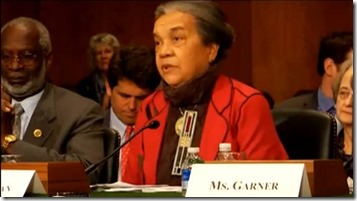
The hearing entitled, "The State of the American Child: Securing Our Children's Future", brought together a distinguished panel of witnesses to testify on the dire state of our children during these difficult economic times and how citizens and lawmakers must act now to secure our children's future and our nation's future. Others on the panel included, Helen Blank, Director of Leadership and Public Policy for the National Women's Law Center, Dr. Michael Casserly, Executive Director of the Council on Great City Schools, Peter Edelman , Professor of Law, Georgetown Law Center and Faculty Co-Director, Georgetown Center on Poverty, Inequality, and Public Policy, Jennifer Garner, Artist Ambassador, Save the Children and Dr. David Satcher, Director, The Satcher Health Leadership Institute and Center of Excellence on Health Disparities, Morehouse School of Medicine.

Monday, May 20, 2013

Community Empowerment

From Information to Operation with Video on TheEnterpriZe Channel

By Stephanie and Eric Stradford

AMWS, May 18, 2013, Smyrna, GA – Youth Achievers USA Institute joined fellow winners here to launch a new era in community empowerment. “There’s a need to move from information to operation,” said Dr. H. Ben Williams, President, Cobb County Southern Christian Leadership Conference.

The Marietta-Roswell Alumnae Chapter of Delta Sigma Theta Sorority, Inc. put words to work in hosting their Fourth Annual Community Empowerment Summit. According to Cobb SCLC Chair, Dr. Cheryl Graves, “Delta’s here have been working to empower communities through awareness, advocacy, and action. Cobb SCLC is eager to forge partnerships.” The Delta’s focus on issues such as preserving the value of your home, improving your credit, and finding a job are fueling cooperative community strategies and igniting win-win partnerships.

Janice Mathis, Esq., a keynote speaker for this year’s Community Empowerment Summit, talks the talk for transforming rhetoric to reality. As Community Affairs Host on WAOK-AM/WXAG-AM/WVEE-FM, Mathis is no stranger to community needs. She walks the walk as Vice President of Legal Affairs for Rainbow PUSH – Atlanta, and as a member of Delta Sigma Theta Sorority, Inc.’s National Social Action Commission.

clip_image002The Summit, designed to “move the community toward stability and growth,” will need to engage Mathis and other advocates more frequently to ensure goals and visions become measurable programmatic reality. “The goal is to empower the underserved in the community, particularly, during times of economic crisis and instability,” said Patsy A. Pattman, president of Marietta-Roswell Alumnae Chapter of Delta Sigma Theta Sorority, Inc. Pattman has presided over the enterprising chapter for the last four years.

clip_image004
First Vice President Wilma Z. Davis is the chapter’s president-elect. Davis’ experience in developing and managing community programs identifies a key community asset for operating in decency and order.
The movement from information to operation will require unprecedented cooperation within and beyond partnering organizations. “We must further explore the concept that empowerment of all key players is necessary to stabilize growth,” said Davis.

The evolution from information to operation will need to build on the understanding of credit scoring systems and actually improve credit scores at the same time. Chapter member Patricia Mack, an investment specialist at PNC Bank, brings a wealth of experience and resources to address long-term economic challenges.

As a member of the Marietta Roswell Alumnae Chapter (MRAC) of Delta Sigma Theta Sorority, Inc., Mack and others will need to consider innovative economic programs to create significant positive impact in the Cobb, Cherokee, and North Fulton counties. Some key areas for economic program development include:

DSTMRAC 2012 Annual Report

Valuing our youth, fostering economic empowerment among families and businesses, qualifying community members to purchase a home and/or preserve its value in today’s economy, and identifying actual revenue generating opportunities to include jobs.

Deltas have been empowering women to empower their communities for 100 years. Founded on January 13, 1913 by twenty-two collegiate women at Howard University, Delta Sigma Theta Sorority, Inc. is a private, non-profit organization whose purpose is to provide assistance and support through established programs in local communities throughout the world.

A sisterhood of more than 200,000 predominately Black college educated women, the Sorority currently has over 900 chapters located in the United States, England, Japan (Tokyo and Okinawa), Germany, the Virgin Islands, Bermuda, the Bahamas and the Republic of Korea.

The sorority programs are based upon the organization's Five Point Programmatic Thrusts

- Economic Development, Educational Development, International Awareness and Involvement, Physical and Mental Health, and Political Awareness and Involvement.

To learn more, go to www.dstmrac.com

Interactive reports courtesy of The American Mentor Wire Service, Youth Achievers USA Institute. For more information, www.YouthUSA.net/AMWS


Tuesday, April 30, 2013

Destination Wally World?

clip_image002
By Eric and Stephanie Stradford

AMWS April 29, 2013, Atlanta -- At the Ray of Hope Christian Center, Michael and Cassandra Curtis mapped a pathway for betroved brides and brethren to a destination they dubbed, “Wally World.” Cassandra brings to a winners’ knowledge base an earned Bachelor's degree in Applied Behavioral Science from National Louis University. The couple adds value to nine weeks of counseling with time-tested methods and models for successful marriage.

Ray of Hope Pastor Reverend Dr. Cynthia L. Hale, ministers her Decataur, GA congregation to "impact and transform this present world into the Kingdom of God." Ray of Hope is well known for its Housing, Healthcare and Education Initiatives. The ministry is recognized in the book, Excellent Protestant Congregations: Guide to Best Places and Practices.

Among the believers in Dr. Hale's flock is an emerging leader, distinguished by her written vision of her own future. Yvonne R. Griswold, a 2007 winner at THE ANNUAL YOUTH ACHIEVEMENT AWARDS, is nationally recognized as a community asset where she chooses to live, learn, work and worship. Lifelong Mentors characterize her starting point for a preconceived destination as “Money-n-the-Bank.” Griswold’s claim as “a winner” is backed by Youth Achievers USA Institute, the national 501c3 public charity sponsor of economic security strategies and Positive Youth Development programs.

clip_image004Yvonne is one of 88 Americans valued in a corporate vision of the future. That vision builds on the past and sets an economic value for America’s future. The Interagency Working Group on Youth Programs (IWGYP), a collaboration of twelve federal departments and agencies that support youth, refer to the common vision as “positive youth development, an intentional, pro-social approach that engages youth within their communities, schools, organizations, peer groups, and families in a manner that is productive and constructive; recognizes, utilizes, and enhances youths' strengths; and promotes positive outcomes for young people by providing opportunities, fostering positive relationships, and furnishing the support needed to build on their leadership strengths.”

Griswold’s professional service on the YouthUSA national board of directors and as an economist for the U.S. Department of Housing Urban Development, offers evidence of value in her Spiritual, Physical, Social, Financial, Educational, Professional and Recreational goals.

clip_image006Griswold’s betroved, Matthew McNeil said he was most impressed when he “googled” his future bride and learned of her Money-n-the-Bank goals. His own humble spirit and quiet strength builds on a vision for winners shared by family, friends and the couple’s chosen marital mentors.

Last night’s event marked the end of a nine week premarital course at Ray of Hope, and the continuation of a lifelong mentoring relationship enjoyed by Yvonne as a YouthUSA beneficiary. Two new prospective applicants won a chance to win a chance with YouthUSA. A room filled with caring adults at Ray of Hope will likewise win a chance to be the whole village that raises winners.


Wednesday, April 17, 2013

Are You A Winner?

2013 Candidates press for the prize

By Stephanie and Eric Stradford

AMWS, April 17, 2013, Atlanta – Youth Achievers USA Institute, sponsor of THE ANNUAL YOUTH ACHIEVEMENT AWARDS, today launched its 2014 invitation for entries. Americans ages 7-24 qualify for national participation in the organization’s economic capacity building program. April 15th is the annual deadline for entry. A free downloadable application worksheet at www.YouthUSA.net engages a “Whole Village” in the Positive Youth Development of one American Future.

To date, 88 Americans have qualified as corporate beneficiaries for a “fair share” in an ongoing capital campaign. Each winner has posted written goals in seven key areas of human development. The institute values a youth’s individual goals as “Money-n-the-Bank.” A grassroots community reinvestment process matches charitable contributions and social enterprise investments to create economic fellowships for qualifying youth.

Supporters of community asset building commonly refer to these measurable fellowships as “Individual Development Accounts.” As an example, under the federal Assets For Independence (AFI) program, more than 81,000 individuals have enrolled in IDAs. 60,108 accounts have been opened, depositing a total of $56,653,295 in earned income.

Applications for 2013 induction are now being reviewed by a task force of YouthUSA directors, fellow beneficiaries and registered community asset managers. YouthUSA hosts such interactive discussions at its virtual meeting place, THE CONFERENCE CENTER. Any caring adult member of an applicant’s Whole Village can add value to the youth’s vision of his or her own future as a subscriber. YOUTHUSA LIVE MEETINGS, and mobile technical assistance events augment on-demand access to ongoing discussions.

YouthUSA programs and discussions commonly support a federal government definition of Positive Youth Development. The Interagency Working Group on Youth Programs (IWGYP), is composed of representatives from 12 federal departments and 5 federal agencies that support programs and services focusing on youth.

According to the IWGYP, Positive Youth Development is “an intentional, pro-social approach that engages youth within their communities, schools, organizations, peer groups, and families in a manner that is productive and constructive; recognizes, utilizes, and enhances youths' strengths; and promotes positive outcomes for young people by providing opportunities, fostering positive relationships, and furnishing the support needed to build on their leadership strengths.”

Caring adult members of any Whole Village can post congratulatory comments for any of YouthUSA’s current or pending winners. These comments reflect individual and collective interest by the Whole Village, and may add value to YouthUSA’s corporate interest in a particular beneficiary.

2013 APPLICANTS SHOULD LOOK FOR FURTHER INSTRUCTIONS VIA EMAIL

CARING ADULTS PLEASE POST CONGRATULATORY COMMENTS BELOW